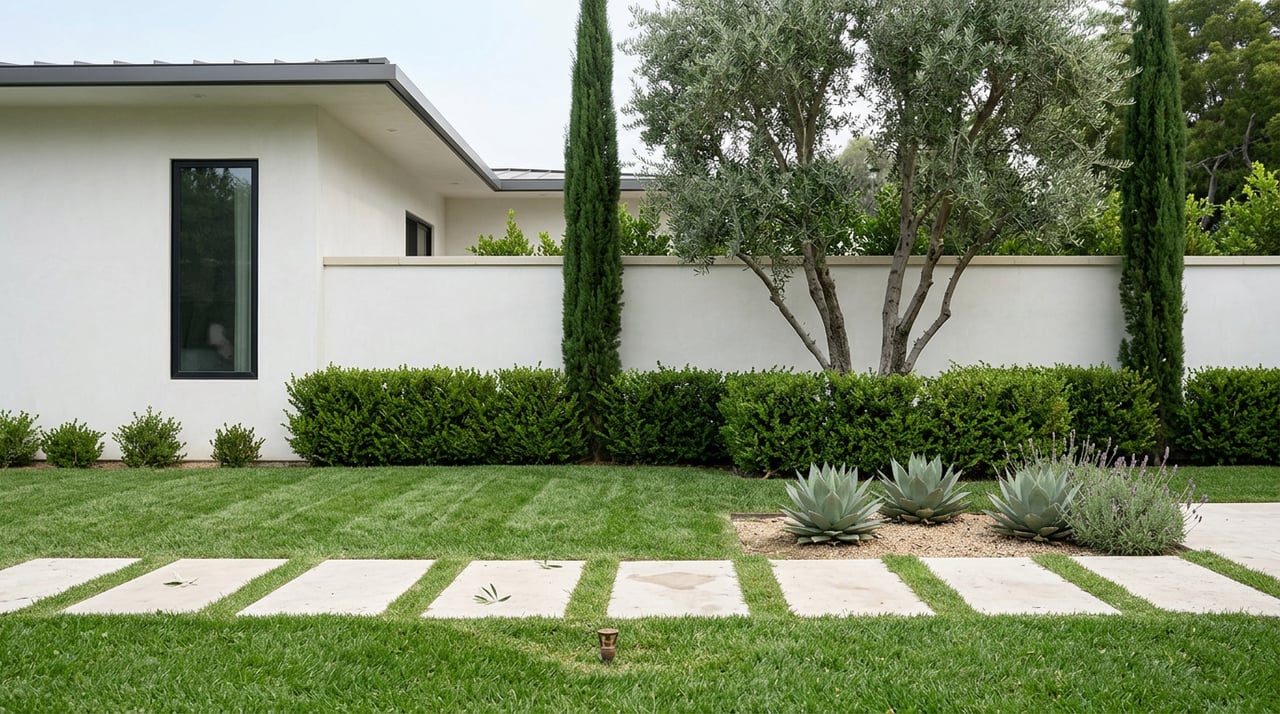
Drive Mapleton or Comstock on any given afternoon and you pass gates, hedges eight feet tall, and driveways longer than most city blocks. Then you reach 601 Club View Drive and the gates disappear. There is no attendant, no call box, no reservation system. A ten-acre triangle of grass sits open to whoever walks in, and it has run that way since before most of the estates around it existed.
That is the real story of Holmby Park. In a neighborhood built almost entirely on private acreage, the one piece of shared ground operates on the opposite principle: first come, first served, no exceptions made for anyone.
A Park With No Front Desk
The Los Angeles Department of Recreation and Parks lists Holmby Park as unstaffed, open from dawn to dusk, with no attendant on site to answer questions. Other sources quote a fixed schedule of 5 a.m. to 10:30 p.m., and at least one review site describes it as open 24 hours. The discrepancy itself tells you something: nobody is checking. If you want a definitive answer on hours, the city's own park page is the one to trust, and even that page directs questions to Westwood District Maintenance rather than anyone standing at the park.
The closest thing to a point of contact is Raul Mora, the park's senior gardener, whose name shows up as the person to reach for maintenance questions. That is the entire staffing structure for a park that sits inside one of the most expensive residential zip codes in the country.
The Only Lawn Bowling Green in the City
Behind the playground, a rectangle of close-cut turf hosts the Holmby Park Lawn Bowling Club, founded in 1927. According to the club's own listing, it operates three mornings a week, Tuesday, Thursday, and Saturday, from 10 a.m. to noon, and is closed the rest of the time.
| Day | Hours |
|---|---|
| Tuesday | 10:00 a.m. – 12:00 p.m. |
| Thursday | 10:00 a.m. – 12:00 p.m. |
| Saturday | 10:00 a.m. – 12:00 p.m. |
| Monday, Wednesday, Friday, Sunday | Closed |
Lawn bowling carries a formal tradition, white attire, precise scoring, decades of etiquette, but the club advertises free lessons and open membership regardless of skill level. A local blogger who has played the adjacent course put it plainly: the club claims to be the only one of its kind operating within the city of Los Angeles. Whether or not that claim has ever been formally challenged, no competing green shows up anywhere else in city park records.
Short Holes and No One Watching
The other half of the park is the Armand Hammer Golf Course, named for the Occidental Petroleum founder who lived in Holmby Hills until his death in 1990. It is a pitch-and-putt, not a golf course in any conventional sense, and even the hole count depends on who you ask: some descriptions put it at nine holes, others at eighteen. Either way, the longest hole runs somewhere around 50 yards, short enough that a wedge and a putter cover the entire round.
City signage restricts the putting green and turfgrass to registered golfers only, but the honor system does most of the enforcement. One local account of playing the course noted there was a small greens fee and nobody around to collect it, and that dog walkers and joggers outnumber golfers on any given visit. That is not a knock on the course. It is a fairly accurate description of how the whole park functions: rules exist, but almost nothing about their enforcement depends on a person being present.
The Rules That Keep an Unstaffed Park From Working Anyway
If there is no staff, the rules have to do the work that staff would otherwise do. The city's posted policy for Holmby Park is short and specific:
- Groups are capped at 25 people
- No permits are issued for the park at all
- No moon bounces
- No vending
- Dogs must stay on leash
- No alcohol, skateboarding, bicycling, or portable barbecues
The detail that catches new residents off guard is the second one. Most Los Angeles parks require a permit for anything resembling an organized gathering. Holmby Park does the opposite: permits are not allowed at this facility, period. If you want the space for a birthday party or a small event, you get it by showing up early, not by filing paperwork weeks in advance.
That is an unusual policy for a park in a neighborhood where almost everything else runs on advance arrangement, invitation, and privacy. Holmby Park is the exception, deliberately so.
Whose Land This Was First
The park exists because Harold Janss and the Janss Investment Company, the developers who carved Holmby Hills out of ranch land in the 1920s, set the parcel aside and deeded it to the City of Los Angeles rather than selling it as additional home sites. Park Commissioner Van Griffith is credited with pushing for the bowling green and the pitch-and-putt course as part of that original plan, which means the park's two signature amenities were baked into the neighborhood's design from the start, not added later.
The city formalized the gift with a dedication ceremony in 1954, led by the Daughters of the American Revolution, and a plaque marking the occasion still stands in the park today. In 1933, Reconstruction Finance Corporation and County Welfare workers used New Deal funding to install roughly 6,100 feet of curbing and new water lines through the park, one of the few documented capital projects in its early history.
The pattern is consistent across nearly a century: a developer gives up buildable land for a shared amenity, and every subsequent improvement has been modest, incremental, and mostly invisible unless you go looking for it.
The Regulars Who Never Needed a Membership
Because the park has never required membership, a fee, or an introduction, it has quietly hosted some of the same people who could have built private putting greens on their own lots. Frank Sinatra frequented Holmby Park in the 1950s. Ronald Reagan, while serving as governor and living a block away in the late 1960s, visited on several occasions, and returned to the park during the final years of his life in the 1990s. Composer Nelson Riddle met his son at the park at 8:30 a.m. on weekdays through the 1980s, a standing appointment that had nothing to do with golf or lawn bowling and everything to do with a quiet place to talk.
None of that required a reservation either.
What Actually Changed Recently
For a park with this much history, recent change has been narrow. The most concrete capital project on record is a full playground replacement completed in 2022, which brought in new equipment and updated site amenities. Outside of that, the lawn bowling schedule, the pitch-and-putt layout, and the honor-system approach to enforcement have gone essentially untouched. A park needs assessment maintained by the city's Recreation and Parks department continues to track priorities for the site, but nothing in that assessment points to a redesign on the horizon.
That stability is itself notable. In a neighborhood where individual properties change hands for tens of millions of dollars and get reimagined from the studs up within a few years of each sale, the one piece of shared ground has stayed almost exactly as it was when the Janss family handed it over.
The One Rule Everyone Follows
Holmby Hills is a place defined by privacy, by gates, by transactions that happen behind closed doors long before a sign ever goes up. Holmby Park runs on the opposite logic, unstaffed, unreserved, open to the first person who shows up on a Tuesday morning to try lawn bowling for the first time. That contrast is not an accident of neglect. It is a piece of the neighborhood's original design that has simply never needed updating.
If you already call Holmby Hills home, you likely know the rhythm of the park better than any website can tell you. If you are weighing a move here, or thinking about what a property near Club View Drive or Mapleton might be worth in today's market, Auburn Properties works this neighborhood at the level of detail this post just walked through. Request a confidential valuation when you are ready for a conversation grounded in the same specifics.