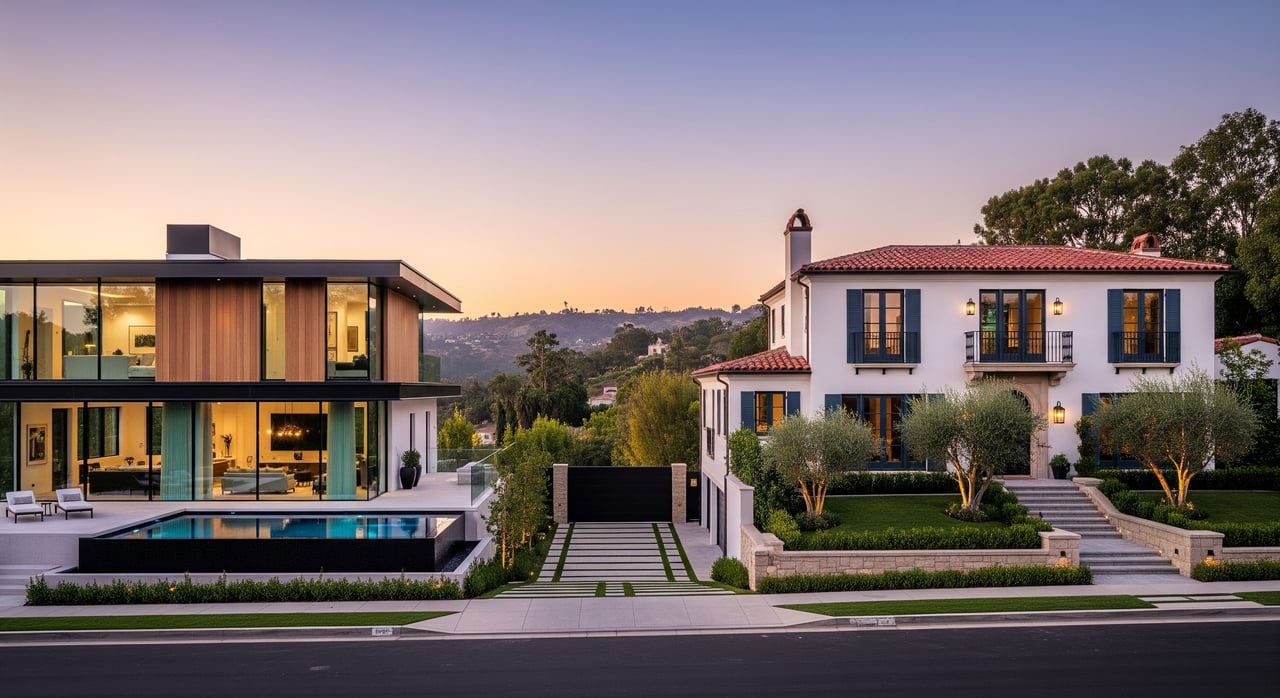
Torn between a sleek new build and a classic Brentwood estate? You are not alone. Each path offers a different mix of privacy, design, maintenance, and long‑term value. This guide lays out the tradeoffs in clear terms, from architecture and energy performance to permitting, financing, and resale, plus a practical due‑diligence checklist to help you buy with confidence. Let’s dive in.
Brentwood market context
Brentwood is an established Westside neighborhood where mature lots, architectural pedigree, and privacy drive value. You will see early 20th‑century estates alongside midcentury homes and high‑spec new construction. Large, well‑located parcels are scarce, which supports values for classic estates with provenance. At the same time, demand is strong for modern, turnkey homes with contemporary layouts and technology.
Architecture and lot fit
Classic estate character
Classic estates in Brentwood often feature Spanish Colonial, Mediterranean, traditional, or midcentury styles. You will find mature landscaping, long drives, guest houses, and layered privacy. Interiors can include period details and formal rooms that add character and presence.
New build layout and tech
New homes tend to offer open plans, large windows, high ceilings, and seamless indoor‑outdoor flow. Amenities often include elevators, theaters, and smart‑home systems. Landscaping is new at delivery, so tree canopy and shade may take time to mature.
Streetscape and heritage
Classic estates usually reflect established setbacks and a mature street canopy, which many buyers value. New builds can reconfigure lot coverage, drainage, and walls, which may draw neighbor scrutiny in hillside or sensitive areas. Properties with architectural significance can carry both a value premium and added constraints if historic rules apply.
Systems and energy performance
Code advantages in new builds
New construction is designed under current California Building Code and Title 24 energy standards. Since 2020, many new single‑family homes are built with photovoltaic systems to meet statewide requirements. You are more likely to see high‑efficiency HVAC, advanced insulation, modern windows, and integrated electrical capacity ready for today’s loads.
Legacy systems in classic estates
Older estates may have aging HVAC, older electrical panels, outdated wiring, and older plumbing. Electrical capacity for EV charging and modern electronics may require an upgrade. Retrofitting solar, batteries, and heat‑pump HVAC is feasible, though often more costly and disruptive than integrating them during new construction.
Health and materials
Classic homes can contain lead paint or asbestos. Abatement adds cost and time if you plan to remodel. New builds typically deliver as‑built plans, energy compliance documents, equipment warranties, and a certificate of occupancy, which helps with documentation and planning.
Maintenance and lifecycle risk
Expected upkeep
Classic estates carry higher near‑term maintenance risks, including roofs, plumbing, electrical, foundation, and termite work. Mature landscaping is a draw, but ongoing care is a budget line. New builds usually have lower immediate maintenance, plus builder warranties, yet punch‑list and warranty follow‑up still require attention.
Site and seismic factors
Hillside or canyon parcels common in parts of Brentwood may need soils reports and engineered solutions. Older homes may pre‑date modern slope and seismic standards. A structural review is wise if you plan significant changes or want to understand seismic performance.
Hidden costs to watch
Unpermitted work, deferred maintenance, and concealed pests or rot can surface during escrow. For new builds, vet the builder’s track record, warranty terms, and completion quality to avoid extended punch‑list resolution.
Permits and timelines
Ground‑up new construction
Expect plan check and multiple permits through Los Angeles Department of Building and Safety, plus inspections during the build. Teaming with City Planning can be necessary for zoning or discretionary approvals. Plan check can take months, and a high‑end custom build commonly runs 12 to 24 months or more once approved.
Major remodels and additions
Remodels also require permits, and any unpermitted work discovered in escrow may need resolution before closing. System upgrades like panels, seismic bracing, or roof replacement are usually simpler to permit than a full rebuild. In historic contexts or overlays, additional review can add time.
Discretionary approvals
Requests for variances, setbacks, or massing changes can trigger hearings and neighbor input. Protected trees, construction staging, haul routes, and parking are practical realities that can affect timing.
Financing and insurance
Financing paths
New construction is often financed with construction loans that convert to permanent financing, with strict draw inspections and contingencies. Classic estates typically use conventional mortgages, although highly unique properties can challenge appraisals and loan‑to‑value assumptions.
Appraisal and valuation
New builds often command a premium per square foot when finishes and amenities are superior, but overbuilding beyond neighborhood norms can limit the buyer pool. Classic estates with provenance, architectural pedigree, or exceptional lots can achieve strong valuations, with comps driven by location and land.
Insurance considerations
Older homes with custom materials or nonstandard framing can carry higher replacement costs and insurer requirements. New builds benefit from modern materials and systems, though high replacement values still drive careful underwriting. Earthquake insurance is separate and commonly evaluated in Los Angeles.
Resale and buyer demand
Turnkey new builds are easy to market to a broad buyer set who want modern function and minimal hassle. In areas where historic character is prized, well‑maintained estates can outperform if updates respect the original architecture. Oversupply of similar new homes can compress pricing, while unique classic estates often face less direct competition.
Decision framework
Step 1: Prioritize lifestyle
- Choose new if you want turnkey living, modern layouts, integrated tech, and lower immediate maintenance.
- Choose classic if you value mature grounds, privacy, and architectural character, and you are comfortable managing targeted upgrades.
Step 2: Time and disruption
- If you accept remodel timelines, a classic estate can be optimized to your taste.
- If you need move‑in certainty, focus on new construction or fully renovated estates.
Step 3: Lifecycle budgeting
- For classic homes, plan for systems upgrades, roof, potential seismic work, and landscape care.
- For new builds, budget for punch‑list, warranty follow‑up, and landscape maturation.
Step 4: Neighborhood fit and comps
- Compare scale, lot, and architecture to recent Brentwood sales. Avoid overpaying for features that outsize the block.
Step 5: Engage specialists early
- Involve an architect, structural engineer, and experienced local agent to validate costs and timelines. For new builds, vet the builder and warranty terms. For estates, insist on comprehensive inspections.
Due diligence checklist
Core documents
- Full permit history and certificates of occupancy
- As‑built or structural plans, and any Title 24 energy documentation
- Survey and plot plan showing setbacks and easements
- Any CC&Rs or neighborhood rules
- Records of major repairs, replacements, warranties, and service contracts
Inspections and reports
- General home inspection
- Structural engineer evaluation, especially for older or hillside properties
- Electrical inspection for panel type and grounding
- Plumbing inspection and sewer scope
- Roof inspection and remaining life estimate
- Termite and wood‑destroying organism inspection
- Hazardous materials assessment for pre‑1978/80 homes
- Geotechnical or soils report for hillside or grading plans
- Tree assessment for protected or significant trees
- Energy systems review, including any solar or battery documentation
- Environmental checks: flood, earthquake, and wildfire severity maps; confirm brush‑clearance requirements
Financial and legal
- Appraisal aligned with neighborhood comparables
- Title search for easements, liens, and restrictions
- Confirmation of any solar lease or PPA terms
- Resolution plan for unpermitted work discovered during escrow
On‑site practicals
- Privacy, sun orientation, and usable outdoor space
- Drive times and access, including construction impacts
- Health and risk profile of mature trees
- Noise and view corridors that matter for long‑term enjoyment
Next steps
Whether you lean new or classic, Brentwood rewards disciplined due diligence. Focus first on the lot and neighborhood fit, then verify building systems, permits, and realistic timelines. If you want a senior‑led team that brings institutional rigor to a luxury purchase, we are ready to help. Connect with Auburn Properties for a confidential conversation about your goals.
FAQs
What are the biggest differences between new builds and classic estates in Brentwood?
- New builds deliver modern layouts, energy efficiency, and lower immediate maintenance, while classic estates offer mature lots, privacy, and architectural character but require more inspections and potential upgrades.
How do energy codes affect new homes in Los Angeles?
- New construction is designed under current California Building Code and Title 24 energy standards, which drive higher efficiency and commonly include solar integration on many single‑family homes.
What inspections are most important for older Brentwood homes?
- Prioritize structural, electrical, plumbing and sewer scope, roof, termite, and hazardous materials assessments, plus permit history and any unpermitted work.
How long does a ground‑up new build typically take?
- After plan check and approvals, high‑end custom construction commonly takes 12 to 24 months or more, with multiple inspections and possible discretionary reviews.
How should I think about resale risk in Brentwood?
- Align the home’s scale and style with neighborhood norms, weigh lot attributes heavily, and consider whether you are competing with many similar new builds or buying a unique classic estate.
What financing differences should I expect?
- New construction often uses construction‑to‑perm loans with strict draws, while classic estates usually fit conventional mortgages, though unique properties can challenge appraisal and loan‑to‑value ratios.