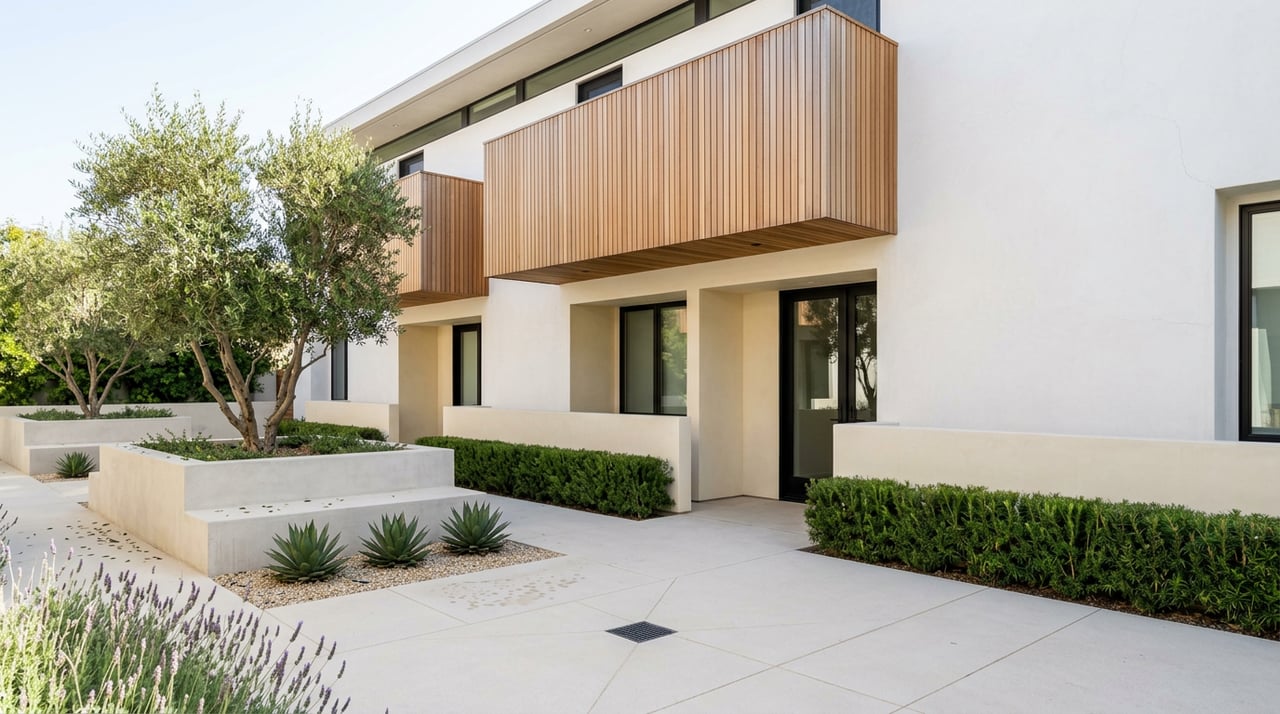
In April 2026, a 1960s-vintage apartment complex in Van Nuys changed hands. The seller, Nuveen Real Estate, had spent close to $17 million on capital improvements since 2020. Institutional Property Advisors, which brokered the sale, described the building's effective age as closer to 2000 than 1966. The deal closed at pricing that reflected a modern asset, not a six-decade-old one, because the seller had already absorbed the cost of making it one.
That transaction is the exception that explains the rule. Most Valley apartment buildings from that era have not had $17 million poured into them. And as of this month, the regulatory clock that quietly separates the two categories has already run out.
The deadline already passed
Los Angeles Ordinance 183893, the city's mandatory soft-story seismic retrofit law, sorted roughly 13,500 wood-frame buildings citywide into two compliance tiers. Priority 1 buildings, three stories or more with ground-floor commercial space, had to finish construction by April 2024. Priority 2 buildings, the smaller two- and three-story properties with tuck-under parking that make up most of the Valley's postwar apartment stock, had until April 2026 to complete the work. That deadline is now five months behind us.
The Los Angeles Department of Building and Safety still frames this as a construction-timeline problem: submit proof of an existing retrofit within two years of the Order to Comply, pull permits within three and a half, finish within seven. For a Valley investor sitting on the buyer or seller side of a deal today, that framing understates what has actually changed. The deadline passing did not just create a construction backlog. It created a pricing problem, and pricing problems move faster than permit queues.
Why the Valley carries more of this than anywhere else
The ordinance exists because of one building. In the 1994 Northridge earthquake, the ground floor of the Northridge Meadows apartment complex, a textbook soft-story design with parking underneath living units, collapsed under the weight of the floors above it. Sixteen people died, all on that ground floor. The failure mode was specific enough that the city eventually built an entire regulatory program around preventing its repeat.
When LADBS first published its inventory in 2016, an LA Times analysis of that list found the San Fernando Valley carried the largest concentration of any part of the city, more than 3,200 buildings holding at least 75,000 units. That count reflects the original 2016 inventory rather than today's exact tally, since some buildings have since retrofitted or come down. But it establishes the shape of the problem: the tuck-under, wood-frame design that defines so much of the Valley's rentable housing stock is precisely the design this ordinance targets, at a density found nowhere else in the city.
The discount isn't in the rent roll. It's in the financing
Here is the part that changes how a buyer should read a Valley listing this year. Retrofit status does not just add a line item to a renovation budget. It determines whether a lender will finance the deal at all.
A building without earthquake insurance struggles to carry or refinance a mortgage. Lenders faced with an uninsurable, non-compliant soft-story asset typically respond one of two ways: force-place expensive replacement coverage, or call the loan outright. Add to that the fact that non-compliant buildings get flagged in county property records, a flag that follows the asset through any future sale or refinance conversation, and you have a structural reason why two buildings with identical rent rolls and identical cap rates can price meaningfully apart based on one variable that has nothing to do with rent.
Brokers who work this corridor regularly describe non-compliant soft-story buildings trading at a real discount to comparable retrofitted stock, often in the range of ten to thirty percent. That is not a defect. For a buyer who can underwrite the retrofit cost accurately, and who has the relationships to move a permit through LADBS efficiently, it is the entire opportunity. Retrofit costs for a typical two- to three-story tuck-under building run from roughly $60,000 to $200,000 or more, generally $10,000 to $30,000 per unit depending on configuration. A buyer who prices that cost correctly at acquisition, rather than discovering it during a lender's underwriting call three weeks before close, is the one who actually captures the discount instead of losing the deal to it.
| Compliance status | Financing reality | Typical pricing effect |
|---|---|---|
| Retrofit complete, permit finaled | Standard insurance and financing available | Prices at or near a comparable, non-soft-story asset |
| Retrofit in progress, permit pulled | Lender may finance with holdback or completion guarantee | Modest discount, narrows as work nears completion |
| No permit, deadline passed | Insurance difficult or unavailable; refinance risk; property record flag | Reported discount in the ten to thirty percent range |
There is a landlord-side lever that softens the blow but does not erase it. Under LA's Rent Stabilization Ordinance, owners can apply to the Housing Department to pass through a portion of retrofit cost, generally capped near half, to tenants as a monthly surcharge spread over a decade or more. That recovers some capital over time. It does not solve the financing problem the day a lender declines to close.
What this actually means depends on which side of the table you're on
For an institutional buyer or a family office looking at Valley value-add, the mechanism above is not a warning to avoid soft-story stock. It is a pricing signal to interpret correctly. The current market backs this up. Kidder Mathews and Matthews Real Capital's first-quarter 2026 report on the LA multifamily market put vacancy at 5.6 percent, up 80 basis points year over year, with average asking rent flat around $2,292 per unit per month. Stabilized mid-tier assets are holding cap rates in the 4.5 to 5.5 percent range, and the same report notes that older, mid-tier Valley buildings are trading more actively right now than newly delivered Class A product, which is sitting longer in developer hands as lease-up timelines stretch. Marcus & Millichap's 2026 forecast puts citywide multifamily deliveries at only about 6,200 units this year, the lowest since 2015, which supports the case for holding rather than assuming oversupply will erode long-term rents. Northmarq's February 2026 report specifically flagged accelerating sales momentum in older, lower-tier stock, which is exactly where the soft-story question lives.
A buyer who treats a non-compliant Valley building as simply "cheaper" is missing the mechanism. A buyer who treats it as a fixed-cost, fixed-timeline retrofit project with a known ceiling on financing risk is pricing the asset the way an institutional workout desk would: not as a distressed property, but as a project with a defined path to stabilization.
For a seller, the Van Nuys transaction is the template rather than the exception to aspire to. Capital spent on compliance before listing does not just avoid a discount. It repositions the asset's effective age in exactly the way that deal demonstrated, and it removes the single biggest reason a financing contingency falls apart in the final weeks of escrow.
Frequently Asked Questions
How do I find out if a specific Valley building is on the soft-story list? LADBS maintains the compliance inventory and can confirm a building's Order to Comply status and current deadline tier directly.
Does an unfinished retrofit transfer to the buyer at closing? The compliance obligation runs with the property, not the owner. A buyer acquiring a non-compliant building inherits the Order to Comply and its remaining deadlines, which is why underwriting the retrofit cost before offer, not after inspection, matters.
Can retrofit cost be recovered from tenants after the sale closes? Under the LA Rent Stabilization Ordinance, a new owner can apply for the same capital-improvement pass-through available to the prior owner, subject to Housing Department approval and the existing cap on the monthly surcharge.
Auburn Properties has spent three decades on the side of real estate transactions where the asset's condition, not just its rent roll, determines the outcome. Whether you're a fiduciary evaluating a Valley multifamily acquisition, a lender's workout team assessing exposure on a soft-story loan, or an owner deciding whether to retrofit or sell, Auburn Properties can walk the underwriting through with you. Request a confidential valuation before your next offer goes in.