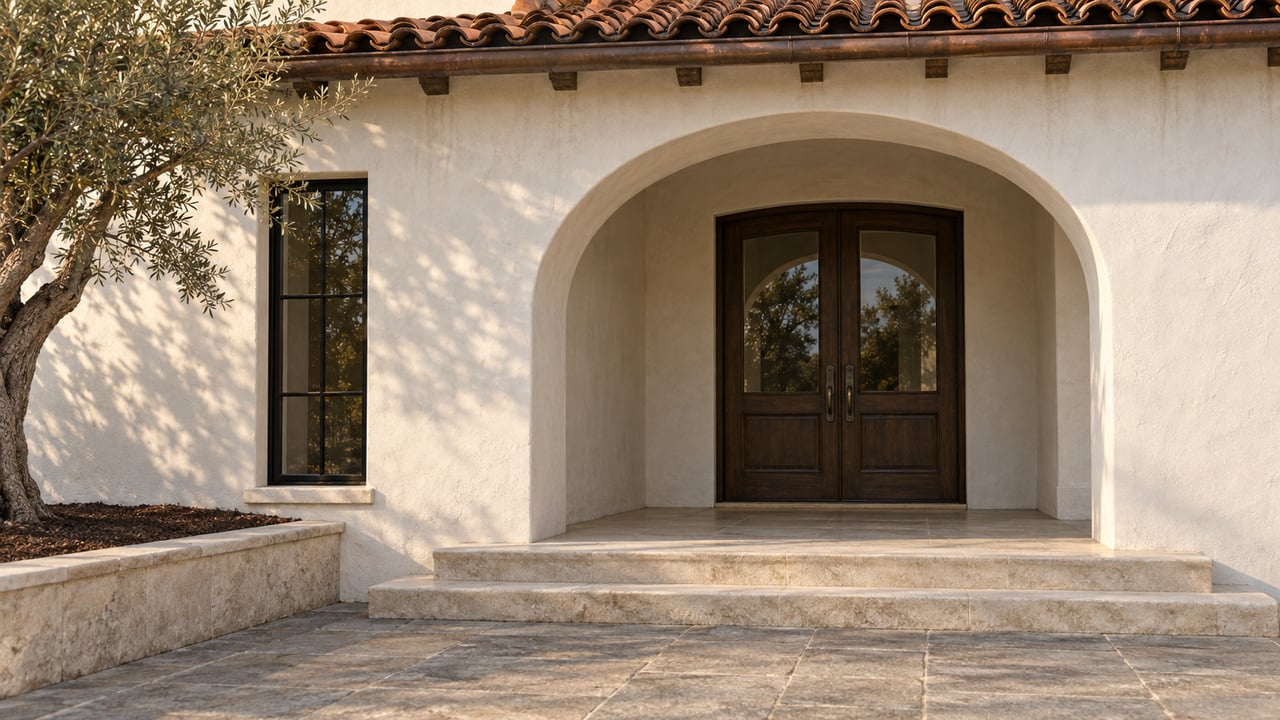
On April 22, 2026, producer Joe Roth closed the sale of 111 North Mapleton Drive in Holmby Hills for $22.3 million. A trust tied to Roth bought the house for $21.5 million in 2011. It first came to market in 2021 at $48 million and went into contract in late March at a $25.5 million ask. On paper, the gain after 15 years was $800,000. At the city's published rates, the City of Los Angeles transfer tax on a $22.3 million conveyance comes to about $1.33 million.
That gap explains the 2026 Holmby Hills market better than any median price. Holmby Hills is a Los Angeles neighborhood, and the city's transfer tax applies to every document that conveys real property within the City of Los Angeles. A sale at or above $10.9 million pays the 5.5% Measure ULA tax plus the city's 0.45% base tax, for a combined 5.95%, according to the Los Angeles Office of Finance. For an owner whose purchase price sits close to today's market value, that 5.95% is no longer a closing cost to absorb. It becomes the number that sets how low the price can go.
The Arithmetic on Mapleton Drive and Beyond
The table applies the city's published rate schedule to prices from 2026 news coverage. The tax figures are illustrative calculations from public numbers. They are not tax estimates for any particular party, and they come before commissions and every other cost of sale.
| Property | Prior purchase | 2026 price | City transfer tax at 5.95% | Price minus prior purchase |
|---|---|---|---|---|
| 111 N. Mapleton Dr., Roth | $21.5M in 2011 | $22.3M, closed April 2026 | about $1.33M | $0.8M |
| 145 N. Mapleton Dr., Jenner | $36.5M in 2020 | $38.5M ask, July 2026 | about $2.29M | $2.0M |
| Nick Candy estate | $28.5M in 2018 | $58M ask, March 2026 | about $3.45M | $29.5M |
| 214 S. Beverly Glen Blvd., former Jean Harlow home | not reported; held for decades | $16.8M ask, April 2026 | about $1.0M | not reported |
The Roth sale closed before the new ULA thresholds took effect on June 30, 2026. At $22.3 million, though, the 5.5% rate applied under the old thresholds and the new ones alike. The rates themselves did not change. Only the dollar thresholds did.
The table splits Holmby Hills sellers into two groups. Candy's estate and the Harlow property carry a wide gap between basis and price. Candy bought from his brother Christian Candy in 2018 for $28.5 million, and Christian had paid $24 million in 2013. The Harlow house, built around 1932, had not changed hands in decades. For owners like these, the transfer tax is a large expense, but it does not decide whether a sale makes sense.
The Mapleton Drive sellers bought near the top of their own market. Jenner's $9.5 million cut, from $48 million in December 2025 to $38.5 million, left her ask about $2 million above her 2020 purchase price. The Real Deal noted that the cut does not threaten a profit if the home sells at or near the new price. That is true of the gross number. After the city's 5.95% at that price, about $2.29 million, the margin is below zero before any other cost of sale.
Why the Cut Stops Where It Stops
The usual reading of a price reduction is that the seller has accepted the market. In Holmby Hills, a cut that lands near the seller's purchase price plus transfer tax often means something narrower. The seller has reached a floor and is testing whether a buyer will meet it.
Buyers have little reason to meet it. Emil Hartoonian of The Agency described the standoff to The Real Deal in July 2026:
"Buyers generally do not assign additional value to a property simply because the seller has a substantial ULA obligation."
Hartoonian said sellers want to factor the tax into price, and that the resulting mismatch between buyers and sellers keeps owners above the ULA threshold from moving ahead. He added that ULA "has become part of nearly every meaningful conversation we have about timing, pricing, renovation and whether a sale makes financial sense."
The listing histories show the same pattern of pulling and relisting:
- Jenner's home was first offered at $48 million in late 2025. It briefly left the market, then returned at $38.5 million, as Robb Report reported on July 7, 2026.
- Candy listed at $85 million in July 2022 and took the estate off the market in November 2025. He relisted it in March 2026 at $58 million, which was $1.5 million below the ask when it was withdrawn.
- 10790 Bellagio Road, a 14,200-square-foot Georgian gut-renovated by Kelly Wearstler, came back in April 2026 at $34.5 million, down from $37.5 million the year before.
- The Roth house moved from $48 million in 2021 to a $25.5 million ask through a series of reductions before it went into contract.
Roth's closing works out to $1,687 per square foot. His ask had been $1,933. The buyer paid a figure that cleared Roth's 2011 basis by $800,000. A seller would only accept a number like that if staying put, or holding out for another cycle, had come to look worse.
The Owners Who Stay
When the transfer tax can wipe out the gain, some owners stop treating a sale as the way out. Oren Levy of Gesh Group, a luxury builder that also remodels existing homes, told The Real Deal that his mix of projects moved from about 80% new development and 20% remodels before ULA to about 60% remodels and 40% new builds. The remodels have also grown, often stripping a house to the studs. The same July 2026 report cited ATTOM data showing a 46% rise in permits for high-priced single-family remodels. That figure compares the two years after ULA with a 2018 to 2019 baseline.
Citywide research points the same way, though its exact size is disputed. A RAND study summarized by Commercial Observer on June 2, 2026 reported a 31% drop in high-value real estate deals after ULA, with single-family transactions down about 28%. UCLA Anderson Review reported in February 2026 that the city's 95th-percentile home sale price briefly rose to about $6 million before the tax took effect, then fell below $3 million as luxury sales slowed sharply. An Occidental College report has criticized the methods and timeframes of the UCLA studies. None of these studies isolates Holmby Hills.
For a Holmby Hills buyer, this means the estates that do come to market lean toward two kinds. The first is long-held property with enough basis gap to absorb the tax, such as the Harlow house. The second is a fully reworked house like the Bellagio Road Georgian, where a renovation has reset the asking price. The owner who bought five or six years ago and has room for neither is the owner most likely to remodel or wait. That owner's house is the one a buyer is least likely to see listed.
No Relief on the November Ballot
A seller waiting for the tax to change has little to wait for as of October 4, 2026.
- City Council: On July 1, 2026, the Los Angeles City Council voted 13 to 1 to note and file a proposed exemption for newly built multifamily and mixed-residential buildings. It directed staff to study a pilot tax-credit program instead. None of it reached single-family estates.
- Proposition TE: The Los Angeles City Clerk's voter information pamphlet identifies the only ULA measure on the city's November 3, 2026 ballot as a one-time exemption or refund for residential properties damaged or destroyed in the Palisades Fire. It covers only sales by the owner of record on the date the fire began, January 7, 2025.
- Statewide: The Howard Jarvis Taxpayers Association withdrew its Local Taxpayer Protection Act in June 2026, as CalMatters reported. Its replacement, Proposition 43, would raise the vote threshold for some future voter-initiated local special taxes starting January 1, 2027. The Sacramento deal behind it leaves existing transfer taxes untouched.
- Legislature: AB 736, a proposed cap on combined local transfer tax rates, was last recorded with a committee hearing postponed on June 25, 2026, and remains in committee.
Reading a Holmby Hills Listing History
The asking price is the least informative number on a Holmby Hills listing. Three public figures do more to show how far a seller can move: the last recorded purchase price, the year of that purchase, and the 5.95% the city collects above $10.9 million. When the current ask sits close to purchase price plus tax, the seller is near the floor, and the relisting history usually shows it. When the gap is wide, as with the Candy estate and its $29.5 million spread over the 2018 purchase price, there is room to negotiate that the tax alone does not use up.
Status reporting on these listings is thin. The latest coverage found dates from July 7 for the Jenner home, March 11 for the Candy estate, April 6 for Bellagio Road and April 1 for the Harlow property. No other Holmby Hills closing from July through early October 2026 surfaced in reporting. Any figures here should be confirmed against current status before they inform an offer.
Frequently Asked Questions
Who pays the transfer tax on a Holmby Hills sale? The city describes its transfer tax as an excise tax on the privilege of selling real property. Custom for city transfer taxes in California varies. Some are customarily paid by the seller, some are split, and the local ordinance sets the rules. Each party should get its own tax and legal guidance.
Did the June 30, 2026 change lower the tax on estates? No. The thresholds moved to $5.4 million and $10.9 million for closings after June 30, 2026. The rates stayed at 4% and 5.5%, with the 0.45% base tax on top.
Does the Palisades Fire exemption on the November ballot apply in Holmby Hills? Proposition TE is limited to residential properties damaged or destroyed in the Palisades Fire and sold by the owner of record on January 7, 2025, the date the fire began. It is not a citywide change to ULA.
For Holmby Hills owners deciding whether to sell, renovate or hold, the answer starts with basis, transfer tax and a realistic clearing price laid side by side. Auburn Properties prepares that analysis with senior-level involvement and full discretion. Request a confidential valuation.
This article is general information, not legal, tax or financial advice. Consult a qualified professional about your situation.