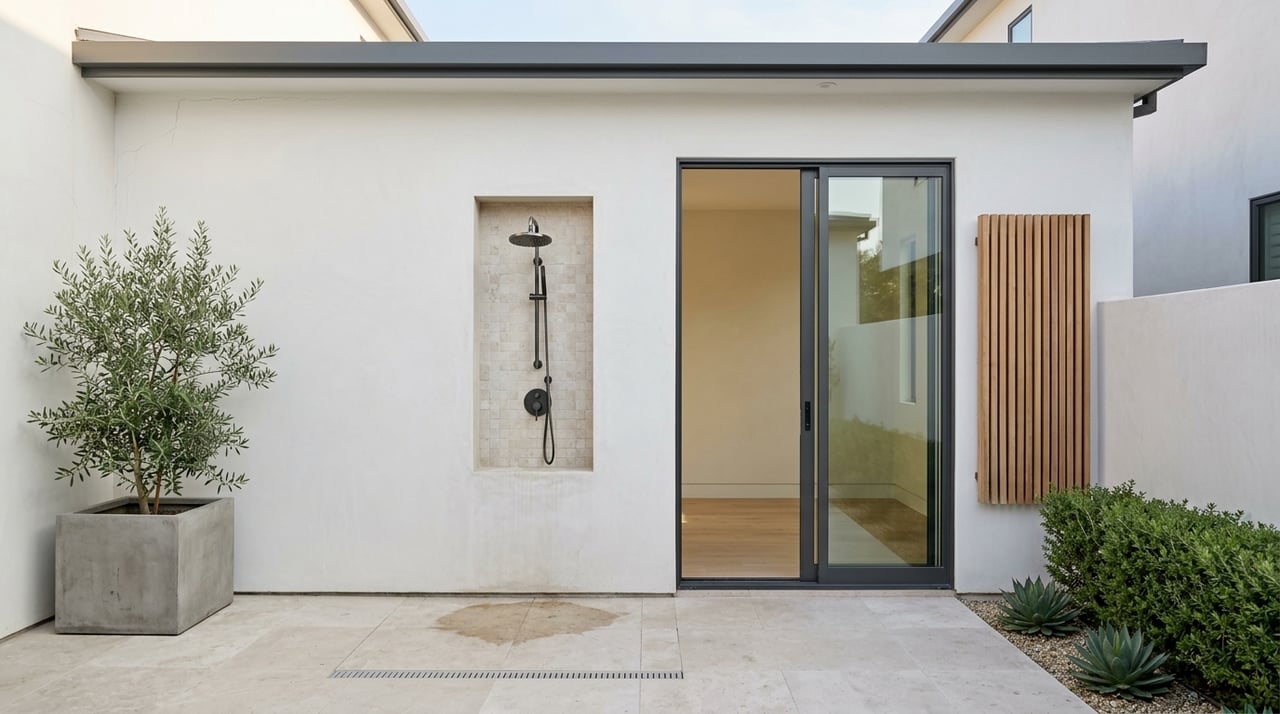
If you are weighing an oceanfront home against a property farther inland in the Beach Cities, the real question is not just view versus no view. Your decision also affects maintenance, insurance review, parking logistics, and whether rental assumptions are realistic for the exact property. Understanding those trade-offs early can help you buy with more confidence and fewer surprises. Let’s dive in.
Oceanfront vs inland basics
In the Beach Cities, proximity to the shoreline changes more than lifestyle. The closer a home sits to the sand, the more marine exposure, flood mapping, parking friction, and short-term rental rules can shape ownership.
That means an oceanfront purchase is often as much a carrying-cost and due-diligence decision as it is a lifestyle choice. Inland homes, by contrast, usually trade some beach convenience for simpler day-to-day ownership.
What oceanfront ownership changes
Oceanfront and immediately beach-adjacent homes offer unmatched access and, in some cases, stronger scarcity value. They also face the highest exposure to coastal conditions.
According to FEMA guidance on coastal construction exposure, salt spray from breaking waves, onshore winds, and coastal humidity can accelerate corrosion of metal connectors and fasteners. FEMA also notes that wind-driven rain can contribute to leaks, corrosion, and dry rot when flashing fails.
For you as a buyer, that often means planning for more frequent inspections and replacement cycles on exposed exterior components. Railings, flashing, sealants, paint, balconies, garage hardware, and outdoor fixtures may all need closer attention near the water.
Why near-beach homes appeal
A few blocks inland can be the middle ground many buyers want. You may still have walkable or bikeable access to the beach while reducing some of the direct exposure that comes with a true oceanfront location.
Marine conditions do not stop at the shoreline. FEMA explains that salt and moisture can still be carried inland by wind, but the intensity generally changes with distance from the water. In practical terms, near-beach homes often strike a balance between coastal lifestyle and a somewhat lighter maintenance profile.
Why inland homes stay competitive
Farther inland, homes generally face less direct salt spray, wind-driven moisture, and coastal flood or wave risk. That can translate into lower upkeep pressure over time.
For many buyers, inland ownership also feels easier on a daily basis. Parking may be less restrictive, inventory can be broader, and the home may fit a more practical full-time living pattern while still keeping you connected to the Beach Cities lifestyle.
Maintenance matters near the coast
The main climate issue in a coastal California purchase is usually marine exposure, not heat. Even if a home is not directly on the beach, salt accumulation and humidity can affect roofing details, balconies, outdoor appliances, garage components, and other exterior features.
FEMA’s coastal corrosion bulletin supports a simple takeaway: homes closer to the ocean generally require more active exterior maintenance. The exact cost depends on the property and materials, but buyers should expect coastal wear to be part of the ownership equation.
A smart maintenance checklist
If you are considering a beach-close home, focus your due diligence on:
- Exterior metal hardware and connectors
- Railings and balcony components
- Flashing and roof transitions
- Sealants, paint, and protective coatings
- Garage doors and mechanical hardware
- Outdoor kitchens, showers, and exposed fixtures
This does not mean beach-close ownership is a bad idea. It simply means your maintenance planning should be more deliberate.
Flood maps and insurance review
Flood risk is highly property-specific. You should never assume a parcel’s flood profile based on a street name, marketing description, or general proximity to the coast.
FEMA’s Flood Map Service Center is the official public source for checking flood-hazard mapping by address. FEMA also explains that Zone VE is a Coastal High Hazard Area where wave action and fast-moving water can cause extensive damage during a base flood event.
For buyers using a government-backed mortgage, FEMA states that flood insurance is required in high-risk flood areas. The key point is that the requirement depends on the exact property, not just the zip code.
Earthquake coverage is separate
Coastal buyers also need to review earthquake coverage. The California Department of Insurance states that a standard homeowners policy generally does not cover earthquake damage.
The same guidance notes that California Earthquake Authority policies use percentage deductibles and exclude some items, including landscaping, pools, fences, masonry, and separate buildings. Even if your primary concern is ocean proximity, earthquake insurance should still be part of your due diligence.
FAIR Plan context
In some California insurance situations, the California FAIR Plan may enter the conversation. The FAIR Plan describes itself as an insurer of last resort that provides basic fire insurance when traditional coverage is unavailable, and it may be paired with supplemental coverage.
Its site also recommends asking a broker about flood and earthquake coverage if broader protection is needed. For many buyers, especially closer to the coast, insurance review is layered and should happen early in the process.
Parking can shape daily life
Parking is one of the clearest practical differences between beach-close and inland living. It can affect your routine long after the excitement of the purchase wears off.
In Hermosa Beach’s residential permit program, permits do not guarantee parking, spaces are first come, first served, and there is a limit of three permits per residence. Manhattan Beach also limits overnight residential parking permits to designated beach lots and applies additional restrictions. Redondo Beach has recently emphasized street-sweeping enforcement.
The takeaway is simple: as you move closer to the beach, some neighborhoods function less like standard suburban streets and more like managed parking environments. Even with a garage, guest parking, beach traffic, sweeping schedules, and permit rules can become part of your everyday planning.
Rental income is not automatic
Many buyers assume an oceanfront or beach-close home will naturally have strong short-term rental upside. In the Beach Cities, that assumption can be risky.
Manhattan Beach states that short-term rentals are allowed only in residential properties within the Coastal Zone, with a business license and transient occupancy tax required. Outside the Coastal Zone, they are prohibited.
The same source notes that rules differ materially across nearby cities. Hermosa Beach permits short-term vacation rentals only in certain nonconforming residential dwellings on specified properties, while Redondo Beach does not permit short-term rentals of less than 30 days in residential zones.
What this means for buyers
Beach proximity alone does not create rental income potential. City boundaries, zoning, and local rules matter more than whether a home has an ocean view.
If you are underwriting a purchase with rental income in mind, verify the exact parcel and local regulations before making assumptions. This is one of the most important distinctions between a lifestyle purchase and an income-backed acquisition.
Which option fits your goals?
The right choice depends on what you value most.
Oceanfront homes usually make the most sense if you prioritize direct beach access and are comfortable with higher maintenance exposure, a more layered insurance review, and potential parking complexity.
Near-beach homes often appeal to buyers who want strong coastal access but a more balanced ownership profile. This can be the practical middle ground.
Inland homes are often best for buyers who want the Beach Cities lifestyle with less direct marine exposure and simpler daily logistics. They may also offer a broader range of inventory.
A disciplined way to compare homes
Before you choose between oceanfront and inland, compare each property across the same decision points:
- Distance from the shoreline
- Exterior condition and marine wear
- Flood map status by exact address
- Insurance options and coverage gaps
- Parking setup for owners and guests
- Short-term rental rules for that parcel and city
- Whether your budget supports likely upkeep over time
This approach helps you evaluate the real cost and usability of a property, not just its first impression.
When you want a measured, property-specific view of a Beach Cities purchase, Auburn Properties offers discreet, senior-led guidance grounded in real due diligence. If you are comparing oceanfront and inland options, the right next step is a confidential conversation about your priorities, risk tolerance, and acquisition strategy.
FAQs
Is flood insurance required for every Beach Cities home near the ocean?
- No. FEMA says flood insurance is required for homes in high-risk flood areas with government-backed mortgages, so the exact address should be checked through the Flood Map Service Center.
Do Beach Cities oceanfront homes need more maintenance than inland homes?
- Generally, yes. FEMA guidance says salt spray, humidity, and wind-driven rain can accelerate corrosion and contribute to leaks and dry rot.
Are short-term rentals allowed for all Manhattan Beach beach-close homes?
- No. Manhattan Beach rules state that short-term rentals are allowed only for residential properties within the Coastal Zone and require additional compliance.
Does a standard California homeowners policy cover earthquake damage in the Beach Cities?
- No. The California Department of Insurance says standard homeowners policies generally do not cover earthquake damage.
Is parking usually easier for inland Beach Cities homes than oceanfront homes?
- Often, yes. Beach-close areas in cities like Hermosa Beach and Manhattan Beach can involve permit limits, first-come parking, and added restrictions that make daily logistics more complex.