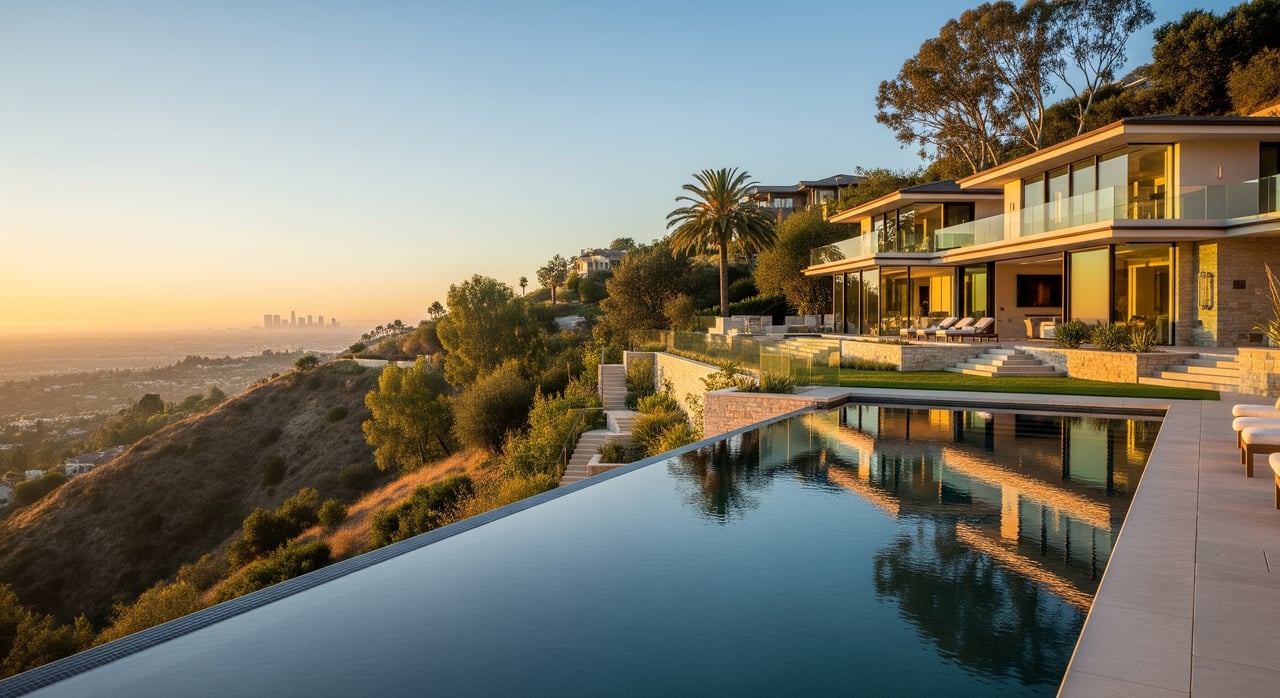
Two lots a few doors apart in Bel‑Air can feel like different worlds. One basks in long sunsets and sweeping city views. Another stays cool and shaded with intimate canyon scenery. If you are comparing hillside estates or planning a design‑forward renovation, understanding how the site sits on the slope is just as important as square footage. In this guide, you will learn how orientation, setbacks and the hillside rules shape light, privacy and view potential, and how to evaluate these details before you buy. Let’s dive in.
Bel‑Air topography at a glance
Bel‑Air spans ridgelines, steep canyons and occasional benches along the Santa Monica Mountains north of Sunset Boulevard and west of Beverly Glen. This terrain creates distinct microclimates and view types. Canyon bottoms are cooler and more shaded. Ridgetops receive stronger wind and sun but often enjoy the longest sightlines across the city, valley and, in select spots, the ocean. Morning and afternoon sun can differ sharply from one canyon side to the other.
For buyers, this means two similar homes can live very differently based on where the lot sits and which way it faces.
Lot types and what to expect
Bel‑Air’s luxury inventory typically falls into three practical classes.
- Canyon floor lots. These are often flatter with deeper setbacks from the street and more internal privacy. Views skew inward to green canyon walls and trees rather than wide panoramas.
- Mid‑slope lots. On moderate slopes, you can find a blend of privacy and selective city or valley views, depending on the aspect.
- Ridgeline or ridgetop lots. These can unlock panoramic exposure in multiple directions. They also face the most design and permitting constraints due to height limits, massing and visibility.
Why orientation matters
Small changes in aspect can alter light levels, comfort and view corridors throughout the day.
Light and sun path
In Los Angeles, south exposures receive the most consistent year‑round sun. West exposures deliver strong late‑day light and sunsets. East exposures capture gentle morning light and cooler afternoons. North exposures receive the least direct sun.
Combine that with slope, and the differences amplify. A south or southwest‑facing hillside will gather abundant afternoon sun and long evening views. A north‑facing canyon lot can remain shaded for much of the day and may need thoughtful daylighting and heating strategies.
Views by aspect
- South and southwest aspects often look toward the city and, in some locations, the Pacific, with long sunset vistas.
- Valley‑facing slopes yield layered city or valley views that change beautifully with weather and time of day.
- Canyon‑facing aspects provide more intimate, green outlooks with strong privacy if vertical separation is favorable.
Privacy in the hills
Steep lots can create vertical separation that enhances privacy if your home sits above neighbors. The opposite is also true. If a neighbor sits above you, they may be able to look down onto terraces or pools. Vegetation, trellises and privacy louvers can help, but brush‑clearance and tree‑protection rules may limit how dense screening can be.
Panoramas versus privacy
Maximizing glass and wide openings captures dramatic views, but it can increase visibility from public vantage points or downhill neighbors. Use strategies like layered glazing, deep overhangs, frosted elements where appropriate and setback terraces to balance openness with seclusion.
Setbacks, height and hillside rules
Most Bel‑Air parcels are within R1 single‑family zones and subject to Bel Air‑Beverly Crest planning policies and the City’s Hillside Development standards. These rules directly influence where you can place windows, terraces and massing.
- Setbacks define the building envelope. Required front, side and rear setbacks determine how close structures and glazing can be to lot lines, which affects view angles and privacy buffers.
- Height and roofline rules matter on slopes. Height is measured differently on steep terrain. This can constrain ridge‑top additions and upper‑level massing.
- Floor‑area limits control bulk. Limits on floor area shape how expansive a hillside home can be and where mass is best distributed.
Hillside sites typically require a topographic survey and a geotechnical report before major changes. The City reviews grading, retaining walls and drainage to protect slope stability. Brush‑clearance and defensible‑space requirements in high‑fire‑hazard areas affect vegetation, which can either open views or reduce natural privacy screens.
One critical legal point: in California there is generally no automatic legal right to maintain a private view. Protection requires a recorded easement or covenant. Always review title for view easements, reciprocal access agreements and any private restrictions that preserve or limit view corridors.
Design moves that amplify views
Great hillside design frames views while managing heat gain, glare and privacy.
- Daylighting. South glazing benefits from shading and high‑performance glass to tame afternoon sun. West glazing often needs robust solar control to avoid overheating. Clerestories and light wells can pull balanced light deep into the plan.
- View framing. Identify primary and secondary view axes early. For example, orient the living area to the city and reserve a bedroom wing for a quieter canyon outlook. Keep roof bulk and parapets low to protect sightlines from key spaces and terraces.
- Terraces and platforms. Cantilevered or stepped terraces can clear foreground obstructions and create layered outdoor rooms that face the best vistas.
- Night privacy. Use controllable exterior lighting, motorized interior shades and selective fritted or frosted glass to protect privacy after dark without losing the night view.
- Solar potential. If you plan solar panels, south‑facing roofs in Bel‑Air are generally favorable when shading and aspect allow.
Due diligence checklist for buyers
Request and review key documents early so you can evaluate orientation, constraints and potential.
Before making an offer
- Current topographic and boundary surveys.
- Recent geotechnical reports and records of any slope stabilization.
- Title report for easements, including any recorded view protections or reciprocal agreements.
- Architectural plans for existing structures and copies of recent permits.
- Any HOA or association rules and private covenants that affect building envelope or landscaping.
- Maintenance records for drainage systems and retaining walls.
On‑site checks and tests
- Visit at different times of day. Morning and evening conditions can feel entirely different.
- Study adjacent parcels. Look for buildable pads above or below that could affect future sightlines.
- Evaluate construction access. Steep or narrow driveways can add cost and time.
- Ask about discretionary processes. Some hillside projects require additional reviews that add schedule risk.
Negotiation questions
- What major grading or stabilization has been completed, and are warranties transferable?
- Are there any recorded view easements or neighborhood rules that preserve corridors? If not, price in the potential risk of adjacent development.
- What permits will your planned improvements require, and who is responsible for any unpermitted work?
Costs, timing and risk
Hillside renovations carry greater technical and permitting complexity than flat‑lot work. Expect up‑front costs for a geotechnical report and surveys. Moderate renovations with minor grading can take months to permit and build. Projects that involve new foundations, significant stabilization or major regrading can extend many months or more than a year. High‑end ridge work and complex retaining systems can be materially more expensive than comparable flat‑lot construction. Always hold a contingency for unknown subsurface conditions.
Insurance and ongoing maintenance are part of the equation. Hazard or landslide‑related coverage can vary by slope condition and fire risk. Retaining walls, drainage systems and mature hillside landscaping require periodic inspections and upkeep.
How views influence value
View premiums are real but variable. Panoramic city, ocean and canyon vistas often command a measurable uplift in Los Angeles luxury markets. The magnitude depends on the view type, whether it is likely to remain over time, the quality of outdoor living spaces and how well the home is oriented to capture the view.
Non‑monetary value matters too. Daylight, comfort and privacy shape how a home feels every day. A dramatic photo window is powerful, but so is afternoon shade on a summer terrace or a living room that glows without turning on lights. Weigh both the headline view and the year‑round livability.
Touring tips by orientation
Use this quick reference as you walk properties and compare options.
- South or southwest. Expect strong afternoon light and long evening views. Confirm shading, glazing performance and heat management.
- West. Spectacular sunsets can come with late‑day glare and heat. Look for exterior shading, low‑e glass and good cross‑ventilation.
- East. Gentle mornings and cooler afternoons. Great for workspaces and breakfast areas. Verify that morning shade from the canyon does not feel too dim.
- North. Soft, even light and cooler interiors. Plan for layered interior lighting and consider ways to warm spaces visually.
- Ridgeline. Multiple exposures and long sightlines. Review height and massing limits, roofline rules and potential visibility from public ways.
- Mid‑slope. Balanced privacy with selective views. Check what can be built above or below you.
- Canyon floor. Calm and private with green outlooks. Confirm brush‑clearance rules, daylight penetration and options for open courtyards.
Work with seasoned specialists
Hillside success starts with the right team. Engage a licensed geotechnical engineer, a structural engineer experienced in hillside work, a civil or site engineer for drainage and retaining design, and an architect with a hillside residential portfolio. A landscape architect or arborist can help balance privacy and defensible‑space rules. A broker who understands Bel‑Air’s slopes, setbacks and view corridors can coordinate these disciplines and keep your due diligence focused.
If you are weighing two very different lots, a quick massing study that tests setbacks, height and view axes can be the most valuable pre‑offer step you take.
Ready to compare options with clear eyes and a disciplined plan? Reach out to Auburn Properties for a confidential valuation and a conversation about strategy.
FAQs
Do Bel‑Air views have legal protection by default?
- No. In California, private views are not automatically protected. Only a recorded easement or covenant can preserve a view, so always verify title documents.
How does a south or southwest aspect affect livability?
- You often get consistent sun, strong afternoon light and long evening views. Plan for shading and high‑performance glazing to manage heat and glare.
Are hillside renovations riskier than flat‑lot projects?
- Yes. Expect added technical complexity, geotechnical requirements, more robust foundations, possible discretionary reviews and higher costs. Good consultants reduce risk.
What documents should I request before making an offer in Bel‑Air?
- Ask for a recent topographic and boundary survey, any geotechnical reports, the title report with recorded easements, plans and permits, HOA or private rules, and drainage or retaining wall records.
How should I value a panoramic view when pricing a home?
- Consider permanence of the view, quality and usability of outdoor spaces, orientation and daylight comfort, and the cost to preserve or enhance the view through design.