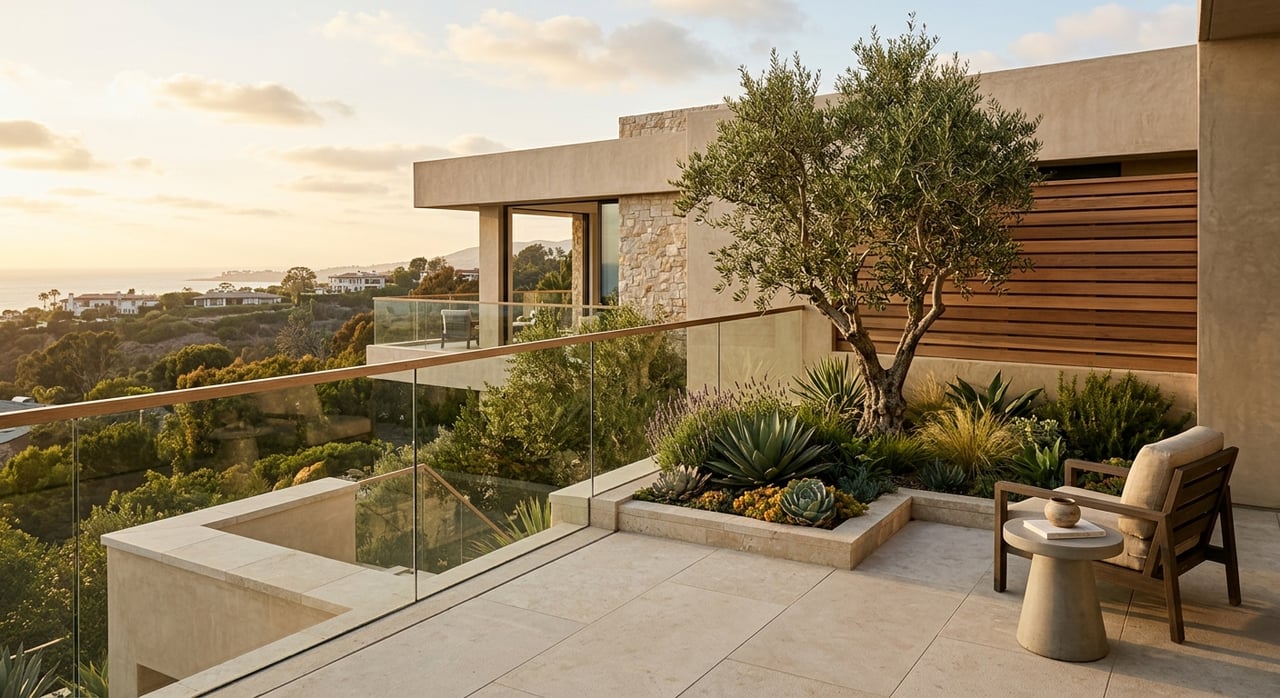
What matters more in Bel Air: privacy, a great view, or resale value? In this market, the answer is usually all three, but the best outcomes come when they work together rather than compete. If you own, plan to renovate, or may sell in the future, understanding how Bel Air properties derive value can help you make more disciplined decisions. Let’s dive in.
Why Bel Air Value Works Differently
Bel Air is not a typical grid neighborhood where homes compete mostly on interior updates and price per square foot. City planning documents describe Bel Air-Beverly Crest as a hillside, estate-oriented area with large lots, substantial setbacks, privacy screening, and homes often oriented toward views instead of the street.
That physical pattern shapes buyer expectations. In Bel Air, the property is often judged as a complete site experience, not just a house. The approach, privacy at the entry, relationship to the land, outdoor usability, and view orientation all contribute to value.
Current market snapshots also confirm the stakes are high. Realtor.com places Bel Air in the multimillion-dollar range with a median listing price of $6.50 million, while Zillow shows a median list price of about $4.51 million. Because those are different market snapshots, the most useful takeaway is the same: this is a market where expensive decisions can have expensive consequences.
Privacy Should Feel Intentional
Privacy is a major part of Bel Air’s identity, but not every privacy feature adds value in the same way. The strongest privacy strategies tend to feel architectural and estate-like, rather than improvised or overly defensive.
SurveyLA notes that Bel Air’s original design language included gates, landscaped medians, and formal entry features. That history matters because it suggests privacy works best here when it is integrated into the arrival sequence and scaled to the lot.
Many Bel Air properties are already screened from public view by walls, fences, shrubbery, setbacks, slope, or gated access. For that reason, simply adding more screening is not always the answer. What buyers often respond to is a calm, well-composed frontage that preserves discretion while still presenting the property well.
What Privacy Features Support Resale
If you are planning improvements, focus on privacy elements that look deliberate and proportionate:
- Gate placement that creates a clear and elegant arrival
- Landscaping that softens screening and supports the home’s setting
- Walls and fencing that provide privacy without overwhelming the frontage
- Service-area screening that keeps functional elements out of sight
- Entry sequencing that feels orderly and refined
In a market like Bel Air, curb appeal still matters, even when the home itself is partially concealed. Buyers want discretion, but they also want confidence that the property has been thoughtfully designed and maintained.
Permits Matter for Privacy Upgrades
Privacy improvements also need to be viewed through a compliance lens. Los Angeles Department of Building and Safety states that masonry or concrete fence walls over 3.5 feet require a building permit, and other fences over 10 feet require a permit, while all fences must still comply with zoning rules.
That means walls, gates, and perimeter treatments are not just design choices. If you are renovating before a future sale, it is wise to evaluate permit and zoning implications early so privacy upgrades do not become a disclosure issue later.
Views Add Value When They Last
In Bel Air, views are highly desirable, but durable view value is usually tied to how the home sits on the land. City planning policy for Bel Air-Beverly Crest emphasizes preserving natural terrain, limiting excessive grading on prominent slopes, and encouraging development that responds to topography.
That is important for resale because a good view is not only about what you can see today. It is also about whether the home’s orientation, massing, terraces, and main living spaces make sense on the site over time.
SurveyLA reinforces this point by describing an area shaped by hills, canyons, steep terrain, and a non-gridded street pattern. In that setting, view value often feels strongest when a house appears naturally placed, rather than forced onto the lot.
Smart View-Focused Improvements
The most resilient view-related investments are often the ones that are hardest to undo and easiest to live with every day. These can include:
- Window and door decisions that preserve sightlines from main rooms
- Terrace placement that frames the outlook without overbuilding the site
- Addition planning that avoids blocking or competing with key views
- Careful grading that improves function while respecting the lot’s natural form
This approach aligns with Bel Air’s planning framework. Preserving the terrain that creates the view can be just as important as opening up the view itself.
Scenic Controls Can Shape Options
Some properties in the Bel Air-Beverly Crest area are also subject to the Mulholland Scenic Parkway Specific Plan, which City Planning treats as an added layer beyond base zoning. For owners, that means the permitting environment may influence what is realistic to enlarge, reconfigure, or add.
If your property has view potential and you are considering a major project, feasibility matters as much as design ambition. A restrained, well-sited improvement may support resale more effectively than a larger concept that introduces approval risk or disrupts the hillside character buyers expect.
Buyers Evaluate the Whole Site
Bel Air homes are often more than a single main structure. SurveyLA describes larger residential properties that may include a main residence, guest house, pool house, detached garage, pool, tennis court, and landscaped grounds.
That is why resale in Bel Air often works differently than in more uniform neighborhoods. Buyers are not only comparing interiors. They are also assessing access, outdoor rooms, privacy layering, drainage, topography, and how each improvement contributes to the overall estate experience.
Luxury buyer research supports that broader view. Coldwell Banker’s 2024 Trend Report found that privacy and a home with a view rank among top desired amenities, while move-in-ready condition trails only location in importance.
What Buyers Notice Most
If you want improvements that translate well at resale, prioritize the features buyers see and feel immediately:
- Move-in-ready kitchens and baths
- Well-considered lighting
- Quality windows and doors
- Functional indoor-outdoor living areas
- Usable and well-landscaped exterior space
- Discreet mechanical and infrastructure upgrades
- Drainage and site functionality that support long-term upkeep
In a luxury market, buyers often pay attention to visible quality and ease of use. Highly personalized statements can work for a specific owner, but they may narrow the buyer pool when it is time to sell.
Topography Can Raise Costs Fast
Bel Air’s hillsides are part of the appeal, but they also add complexity. LADBS states that grading permits are required for work in hillside grading areas, and grading plan checks are required before permits are issued for projects such as slope repairs, landslide repairs, mass grading, basement excavations, pool excavations, and retaining-wall cuts or backfill.
That does not mean you should avoid site work. It means grading-heavy projects should be justified by clear lifestyle or utility gains because they can increase cost, timeline, and approval uncertainty.
If an improvement enhances access, usable outdoor space, drainage, or privacy without flattening the lot’s character, it may age better than a larger intervention that dominates the hillside. In Bel Air, the land itself is part of the asset.
A Practical Bel Air Decision Framework
If you are deciding what to preserve, improve, or market, this framework can help keep the focus on long-term value.
Protect What Cannot Be Recreated
Start with the site’s durable advantages. View orientation, mature landscaping, and the natural slope that gives the property its sense of place are often harder to replace than finishes or fixtures.
Design Privacy With Restraint
Privacy should support the estate character of the property. Gates, planting, and walls tend to perform best when they feel composed and integrated, not oversized or improvised.
Prioritize Everyday Livability
Move-in-ready condition matters in the luxury segment. Kitchens, baths, lighting, outdoor living, and quiet infrastructure improvements often deliver broader buyer appeal than highly specific design choices.
Check Entitlements Early
Before starting major work, verify what permits or reviews may apply. Fences, walls, grading, retaining walls, and excavation can all affect timeline, budget, and eventual resale disclosures.
Market the Site, Not Just Size
When it is time to sell, the story should reflect how Bel Air buyers actually evaluate property. The most compelling presentation usually connects privacy at the entry, views from main living spaces, usable grounds, and the way the home sits on the land.
The Best Bel Air Improvements Are Usually Balanced
In Bel Air, resale value is rarely maximized by chasing just one goal. A property with strong privacy but a compromised arrival can feel closed off. A home with dramatic square footage but overworked grading can feel disconnected from the site. A great view without functional outdoor space or move-in-ready condition may still leave buyers hesitant.
The most durable value usually comes from balance. Preserve what makes the lot special, improve what buyers experience every day, and approach privacy and views as part of a single estate composition.
If you are weighing renovations, preparing for a sale, or simply want a clear-eyed opinion on how your Bel Air property may be positioned, Auburn Properties can provide a confidential valuation.
FAQs
How important is privacy to Bel Air home value?
- Privacy is a meaningful value feature in Bel Air, especially when it feels integrated into the property’s design through gates, landscaping, setbacks, and thoughtful entry sequencing.
Do views always increase resale value in Bel Air?
- Views are highly desirable, but resale value is strongest when the home’s orientation and improvements work with the site’s natural topography instead of relying on aggressive alteration.
What Bel Air upgrades usually appeal to future buyers?
- Move-in-ready kitchens, baths, lighting, windows and doors, outdoor living areas, and functional site improvements like drainage tend to support broader buyer appeal.
Do Bel Air privacy walls and fences need permits?
- In Los Angeles, masonry or concrete fence walls over 3.5 feet require a building permit, other fences over 10 feet require a permit, and all fencing must comply with zoning rules.
Why does topography matter so much for Bel Air resale?
- Topography shapes views, privacy, outdoor usability, access, and permitting complexity, so buyers often evaluate the entire site experience rather than focusing only on interior space.
Should you market square footage or the full estate experience in Bel Air?
- In Bel Air, marketing is usually strongest when it presents the whole property experience, including arrival, privacy, view orientation, grounds, and how the home relates to the land.